An investigation of Gothenburg’s urban digital twinning ecosystem and its actors’ ability to provide opportunities for meaningful civic engagement.
Overview
| BRIEF | APPROACH |
|---|---|
| Investigate the participatory capabilities of urban digital twinning efforts under way in Gothenburg. Do they reflect the city's stated commitment to meaningful participation or do they pray to tokenistic placation? |
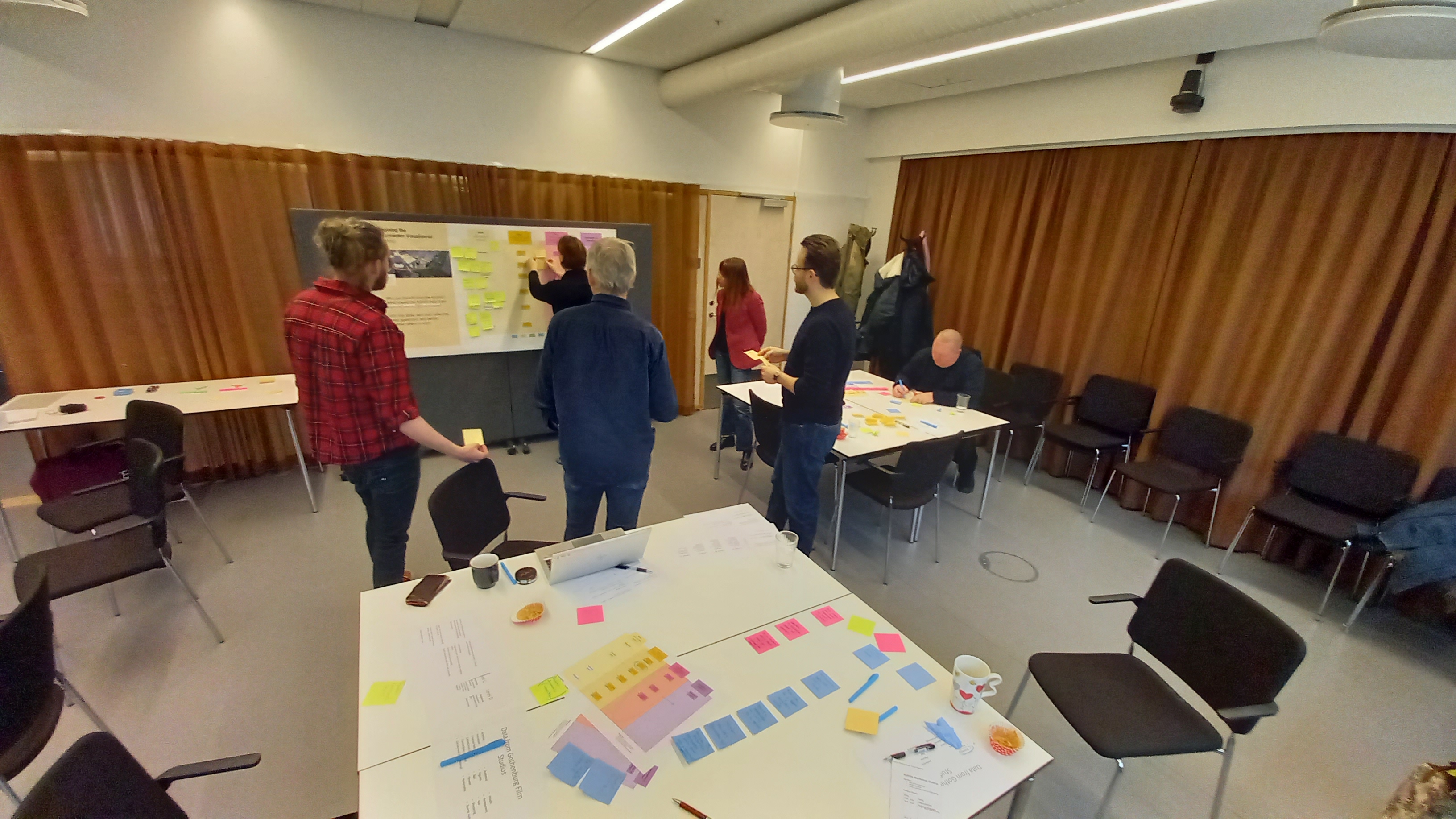
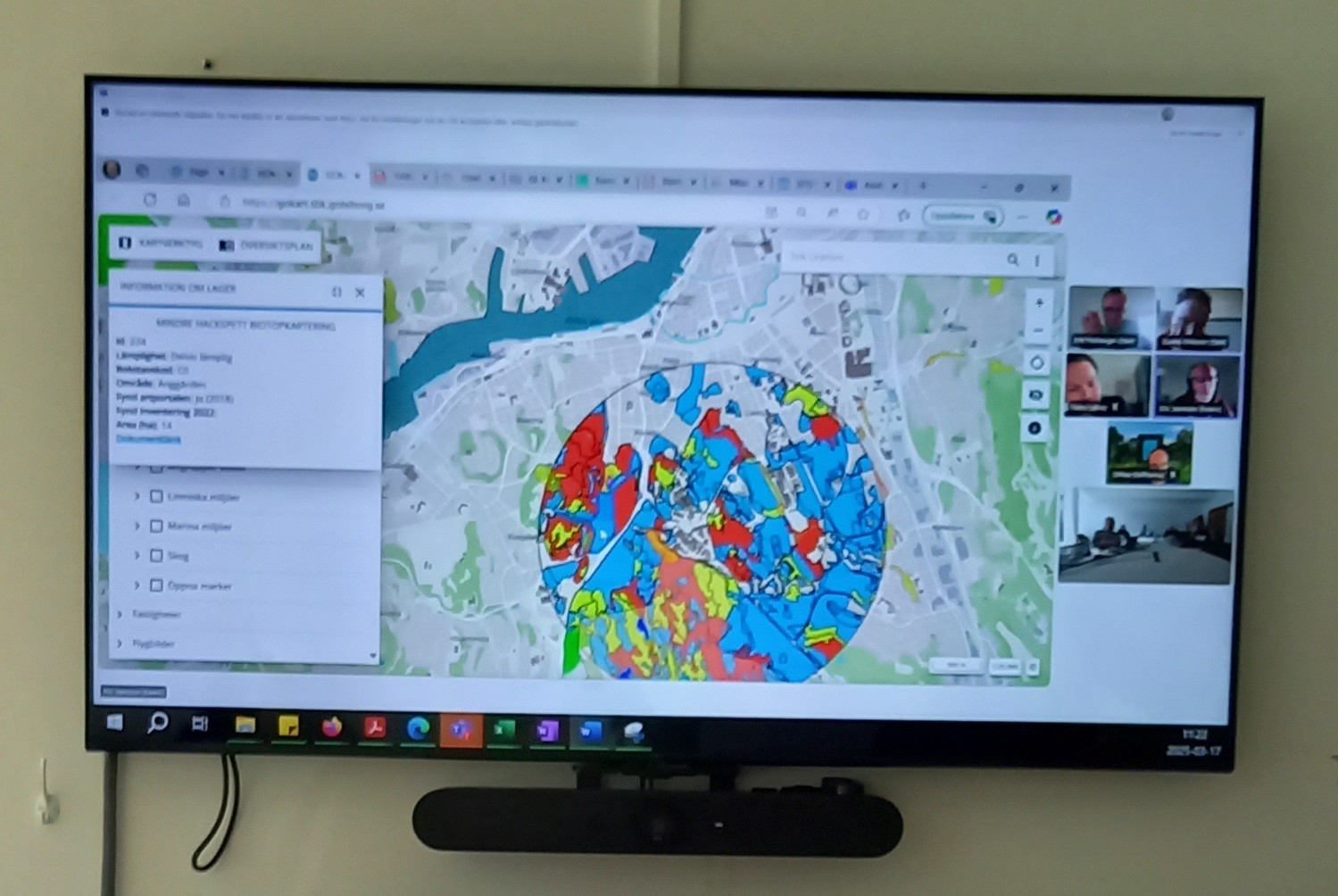
Through a practice-led research approach, I used interviews, document analysis, the shadowing of an urban digital twin in development (the KultVis), as well as my own production of three digital twinning prototypes created in Gazaplatsen to engage in a critical reflection on how the city might better meet its stated goals and uphold the values of the Right to the Smart City. |
Parallel research tracks
The work resulted in the shadowing of the development of the KultVis digital twin and the production of my own digital twin prototypes inspired by the practice of counter-cartography.
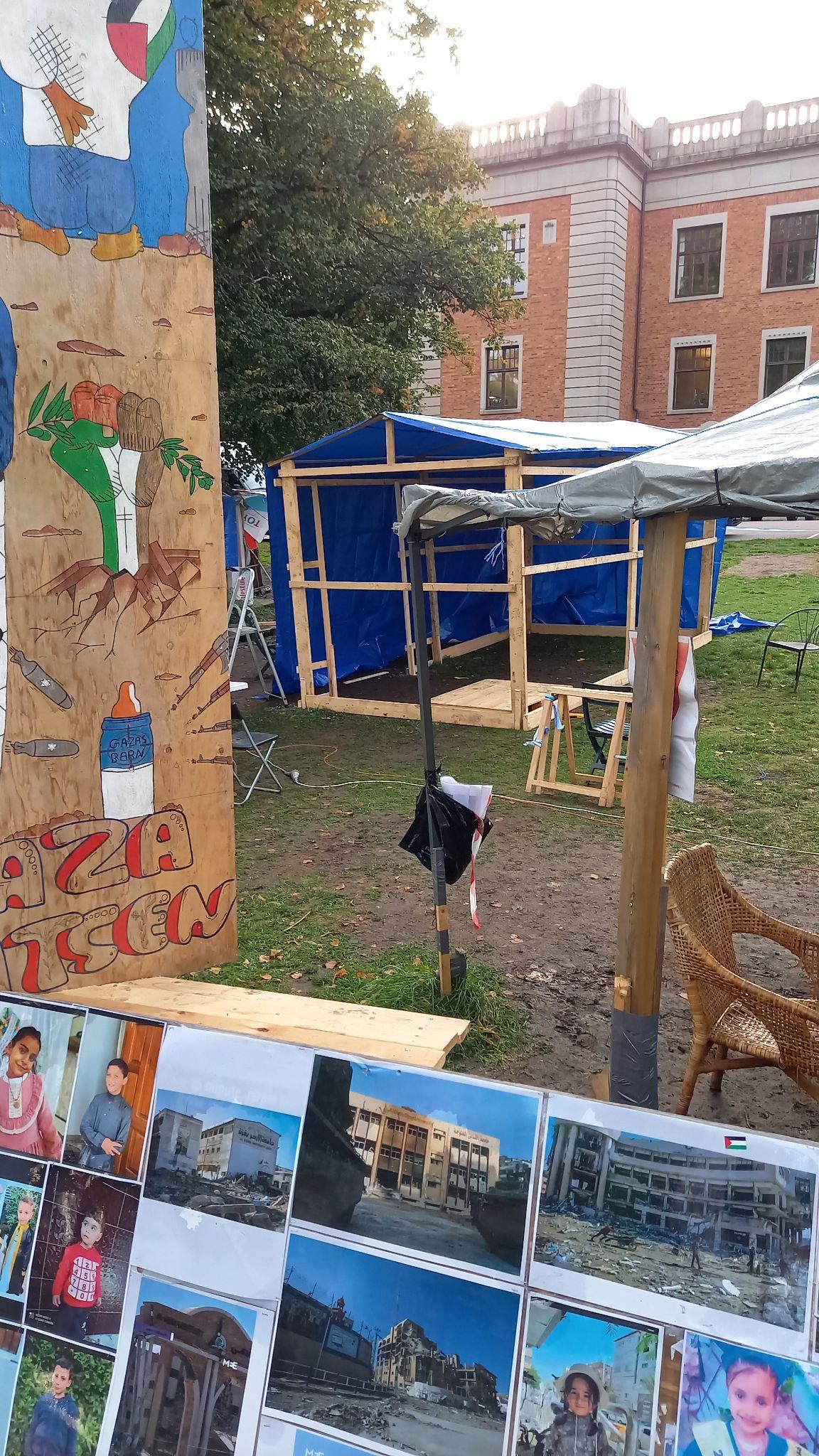
These two approaches to twinning revolved around two key sites, respectively, the Gothenburg Film Studios and the Gazaplatsen encampment. The former was chosen prior to my joining the project as a site where economic development and cultural production cohabit fruitfully. The latter, a protest site, was chosen to explore how a city's digital twin might engage with efforts of civic contestation in a way that reflects the interests of its residents.
An in-depth account of the research can be found here (📑).
| Formal twinning — KultVis | Informal twinning — Gazaplatsen |
| Research into Gothenburg's ecosystem surfaced concerns around the limited abilities available for civic actors to engage with Gothenburg's urban twinning projects (Special attention was paid to Virtual Gothenburg, and the Virtual Gothenburg Lab productions). |
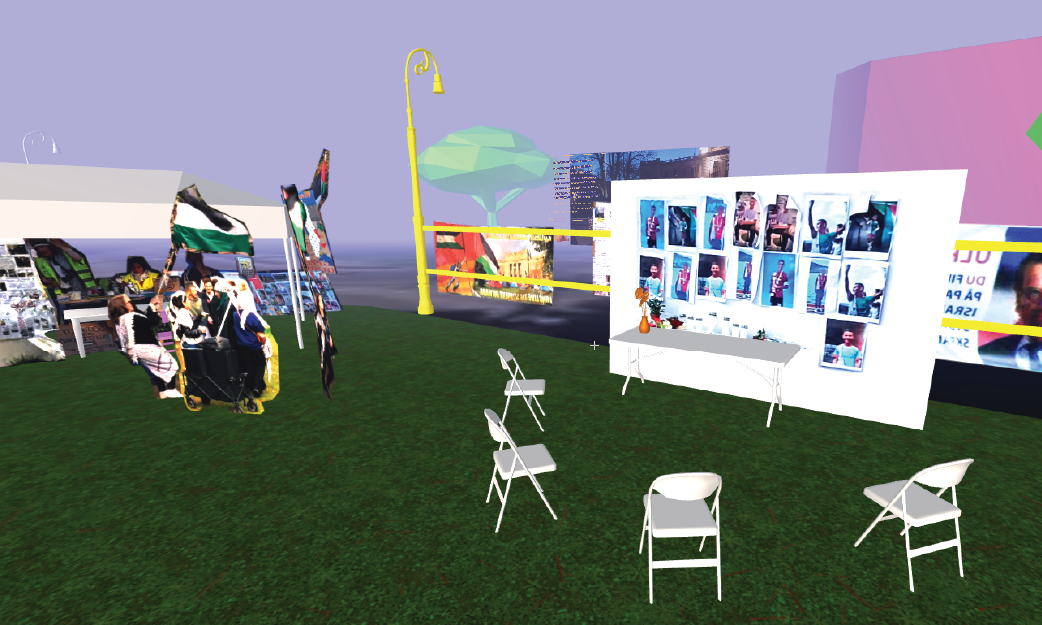
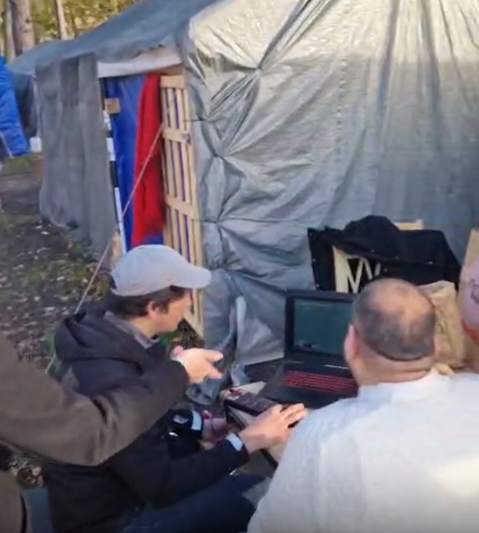
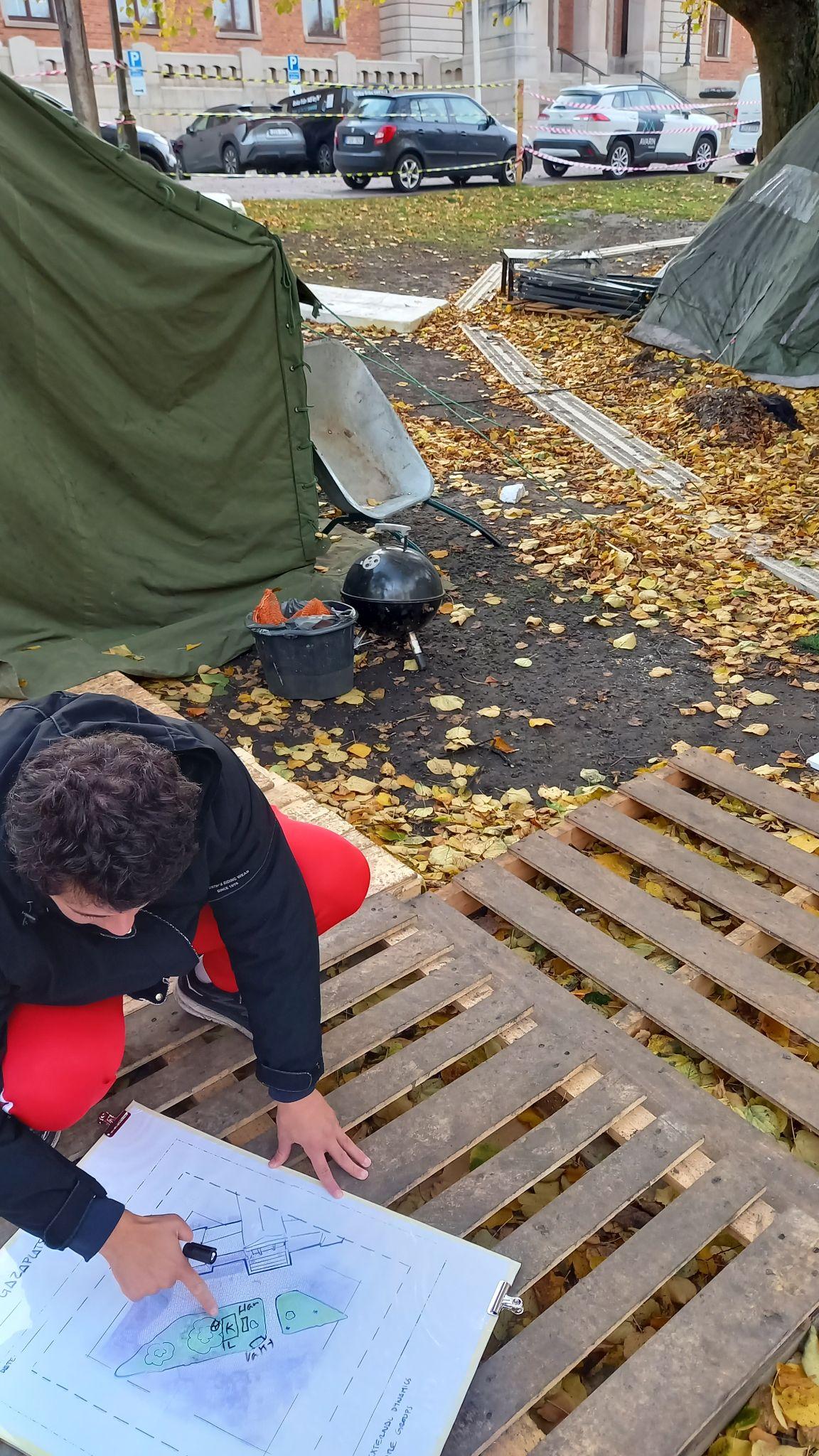
In parallel to my investigation of formal twinning settings, I conducted a series of on-site interviews, subjective mappings, and rapid prototyping loops in Gazaplatsen to explore the value of more adhoc twinning approaches in documenting civic events that do not fit the city's current vision for itself. |
| Key Insights: Participation limited to commenting pre-existing models and simulations Twins remain in early development with little to no possibility for modding or adapting. Twinning development is heavily dependent on interest from the tourism and gaming industries, resulting in reductive, consumerist, understandings of the city's activity. |
Key Insights: In order to be relevant to activist-led applications, urban twinning practices must allow for pluralistic forms of expression and adhoc modes of productions. Twinning that fosters civic sensemaking and visioning need-not only be future facing, but can instead also operate as an archive of meaningful moments. Spatial computing technologies remain underexplored in activist circles as means of aggregating information, and communicating their visions. |
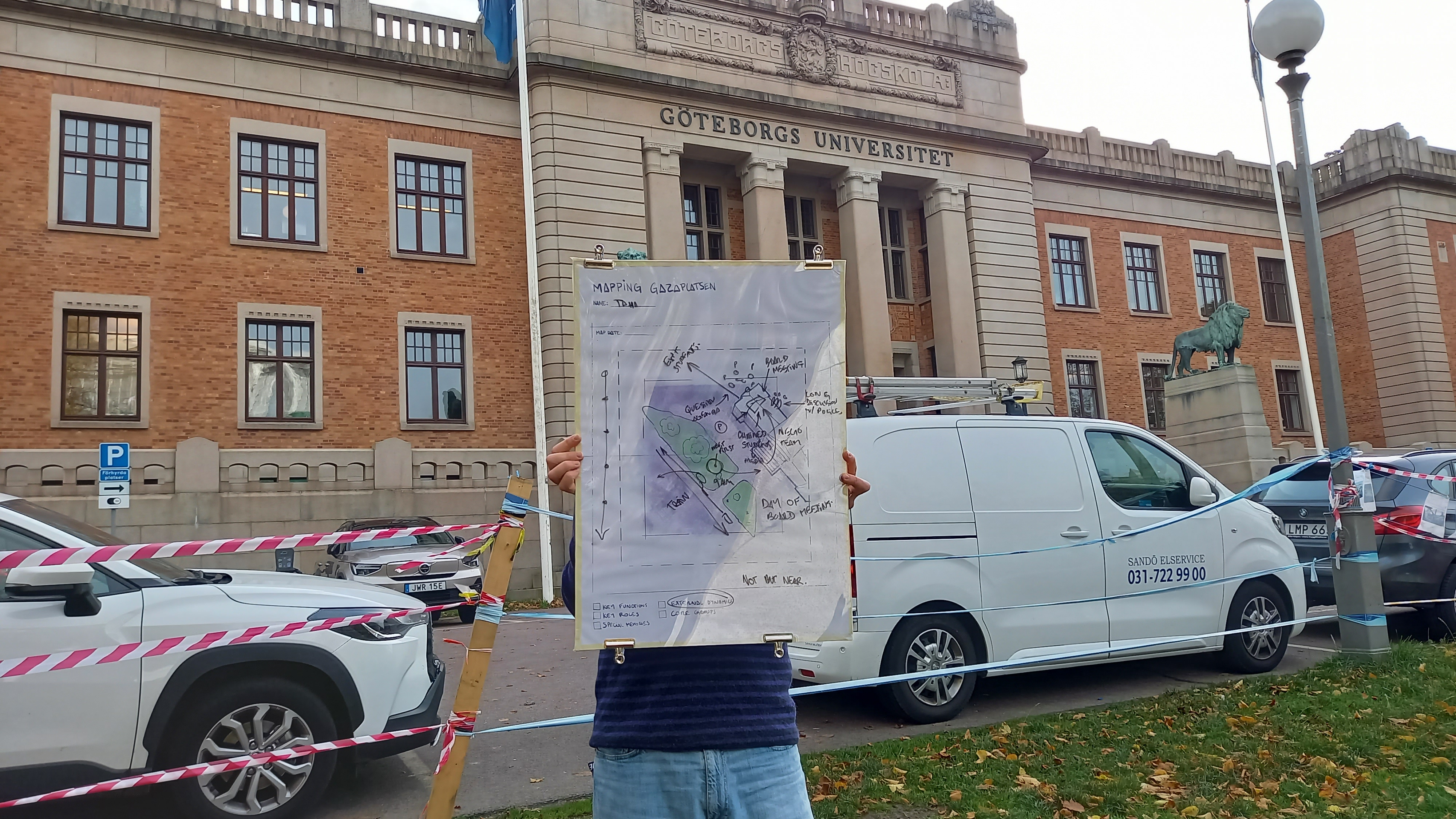
Early explorations
Fairly early on, I knew I wanted to explore how to document contested spaces in urban digital twins, in the hope that one day, this might become a more common, crowdsourced practice.
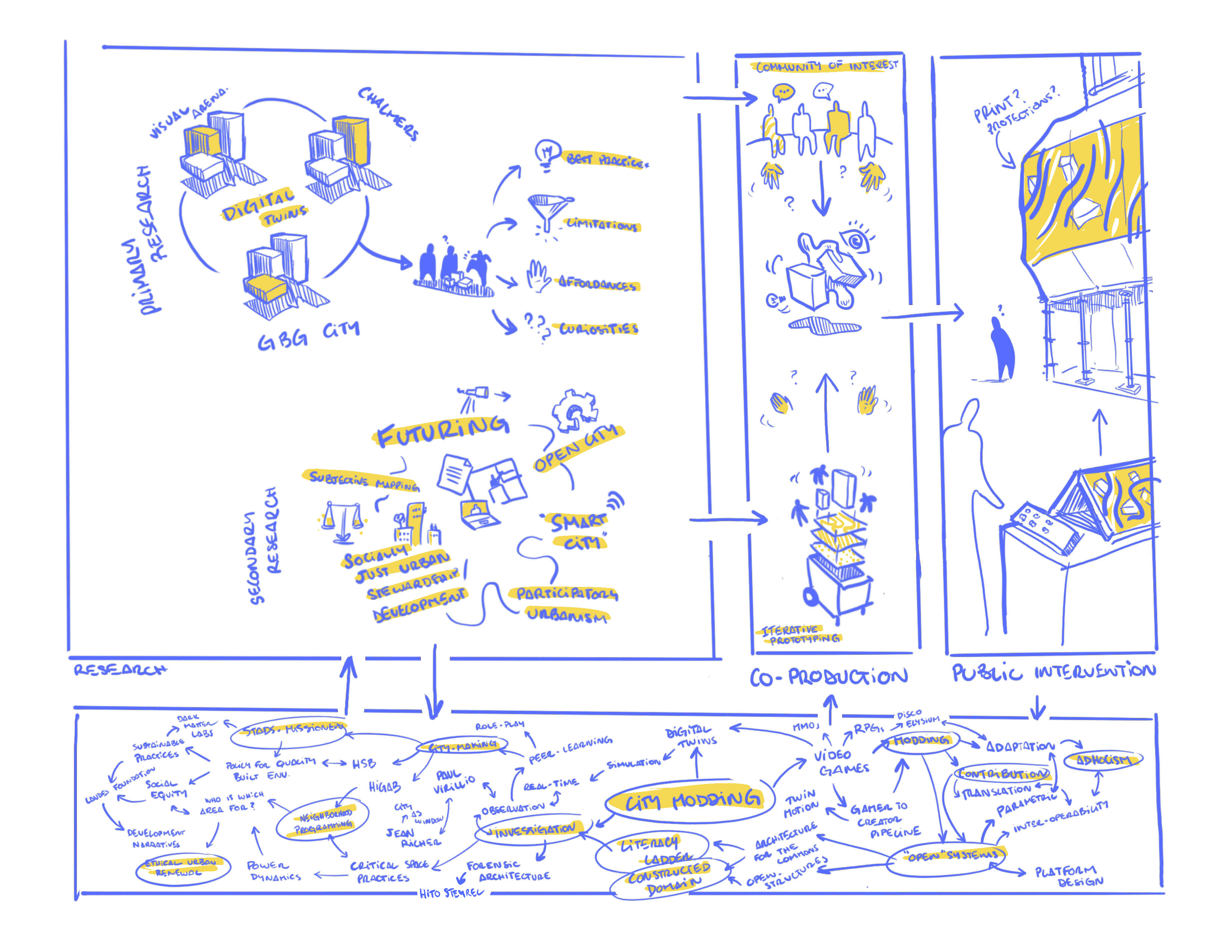
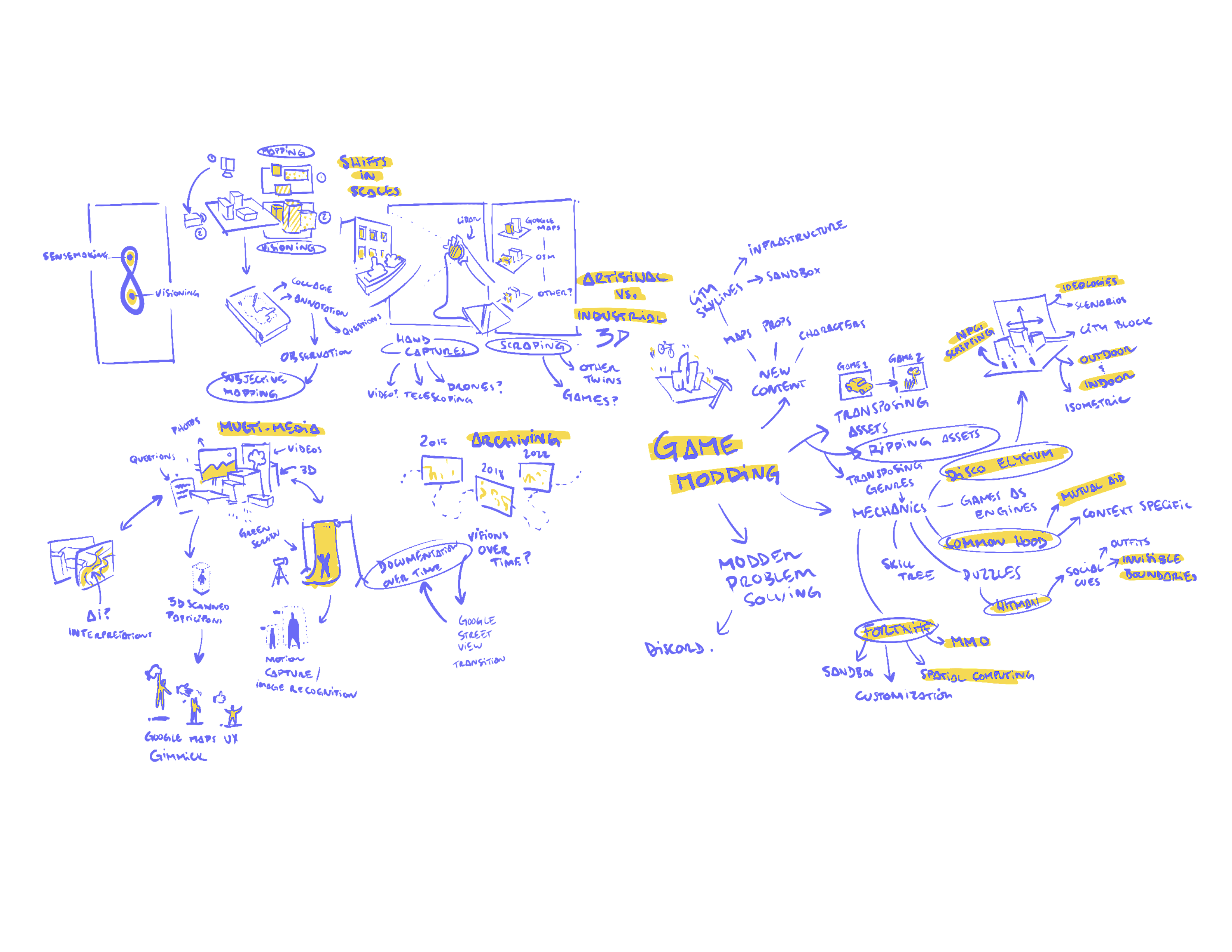
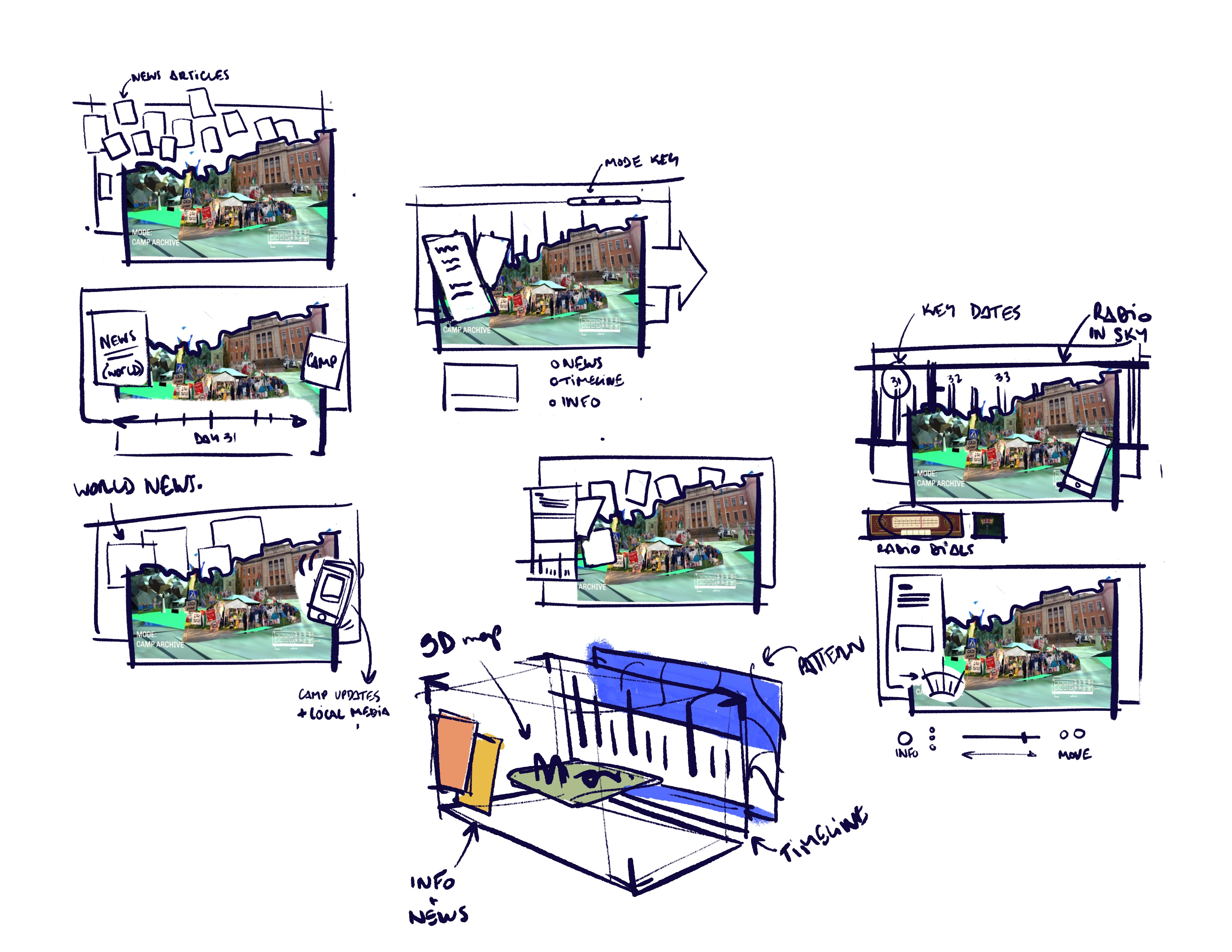
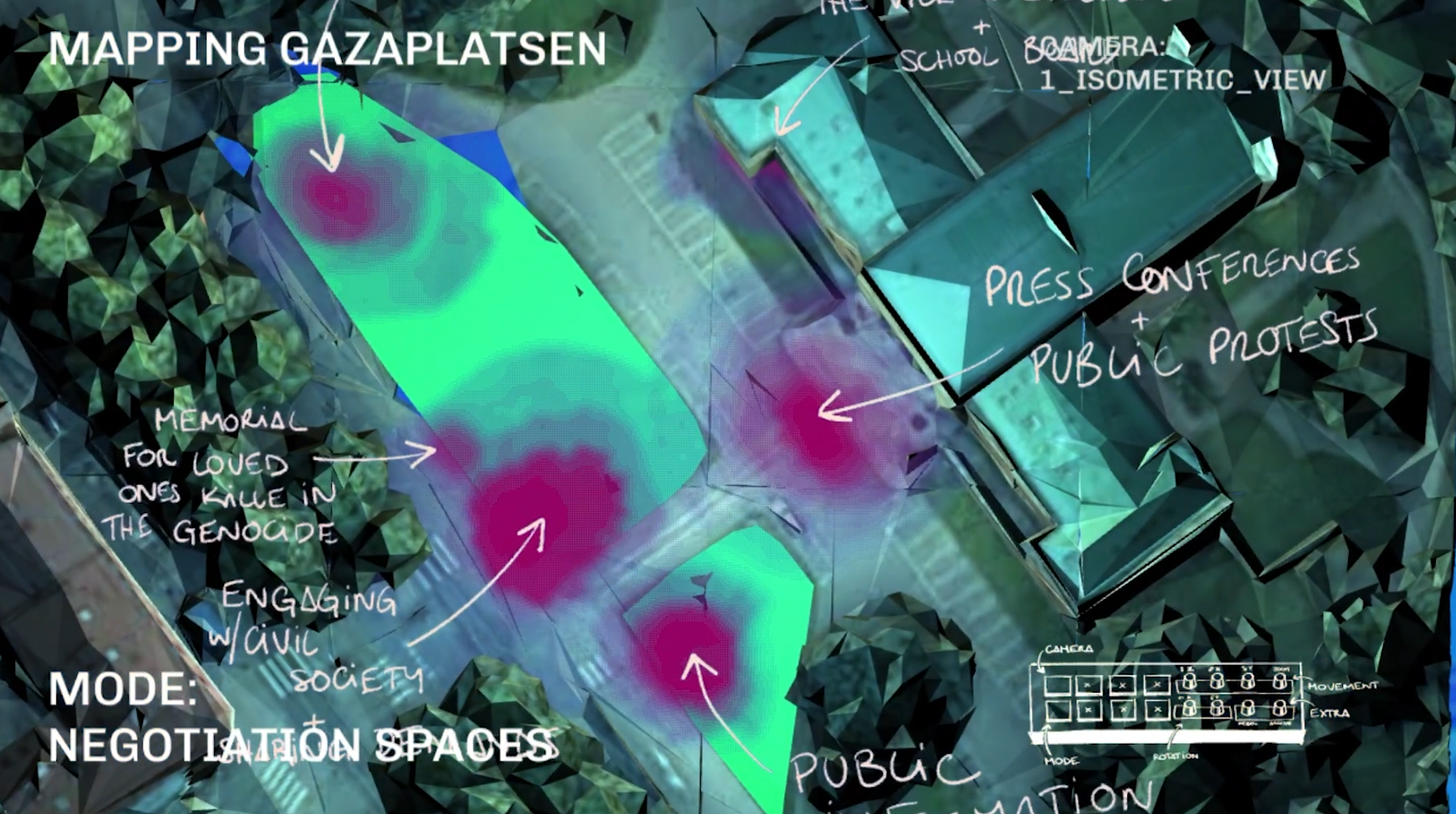
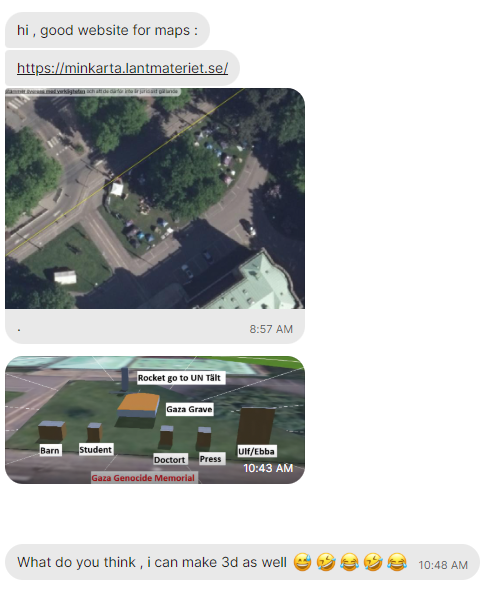
There are many ways to bridge GIS data with more ground-based, personal accounts, defining the structure through which to do this was a great challenge. The choice of the final three formats (Investigative Sandbox, Online Memorial, Conversation Simulator), was at first more of a technical and temporal choice: to visualize the encampment through three distinct timescales and to challenge myself to use distinct mediums to bring them to life.
.jpg) |
 |
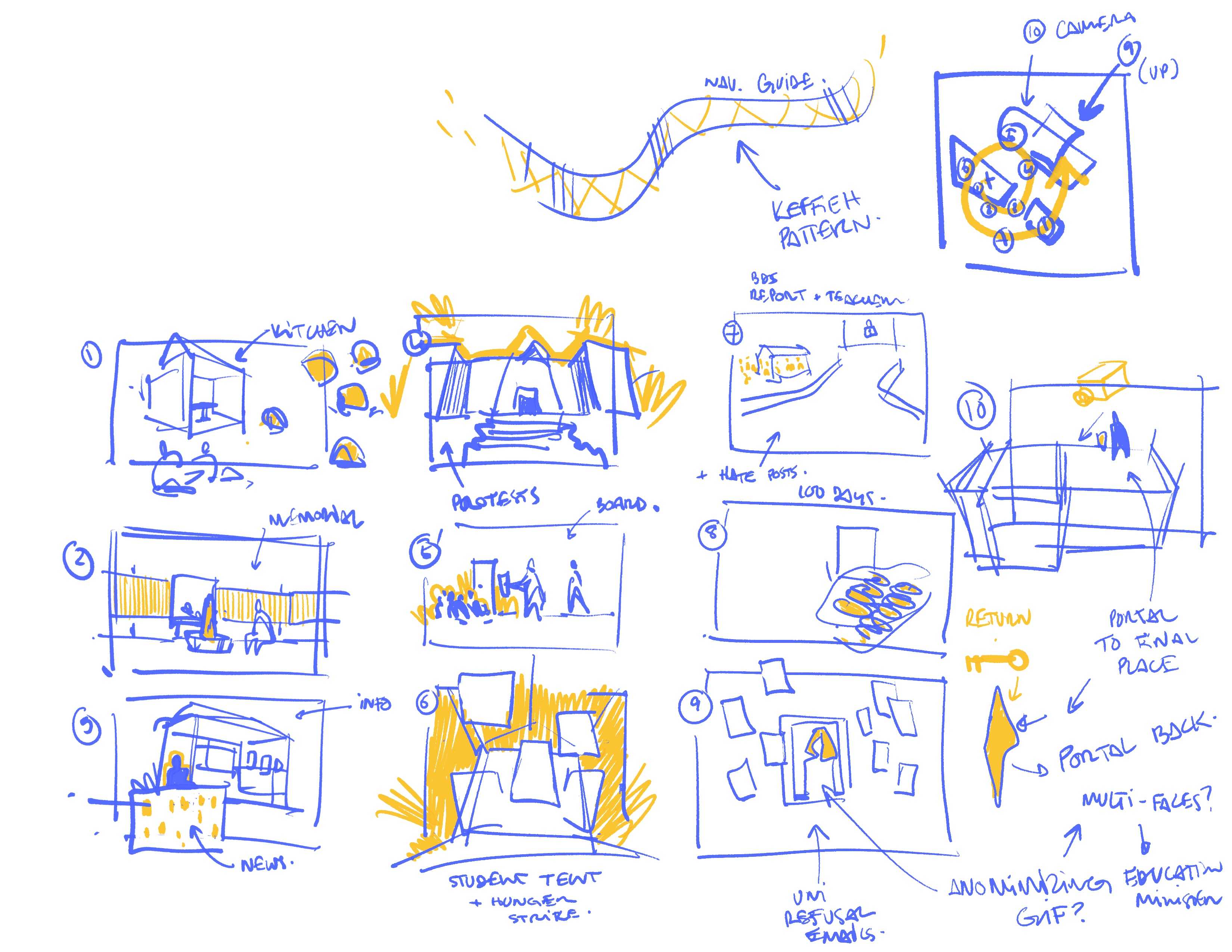 |
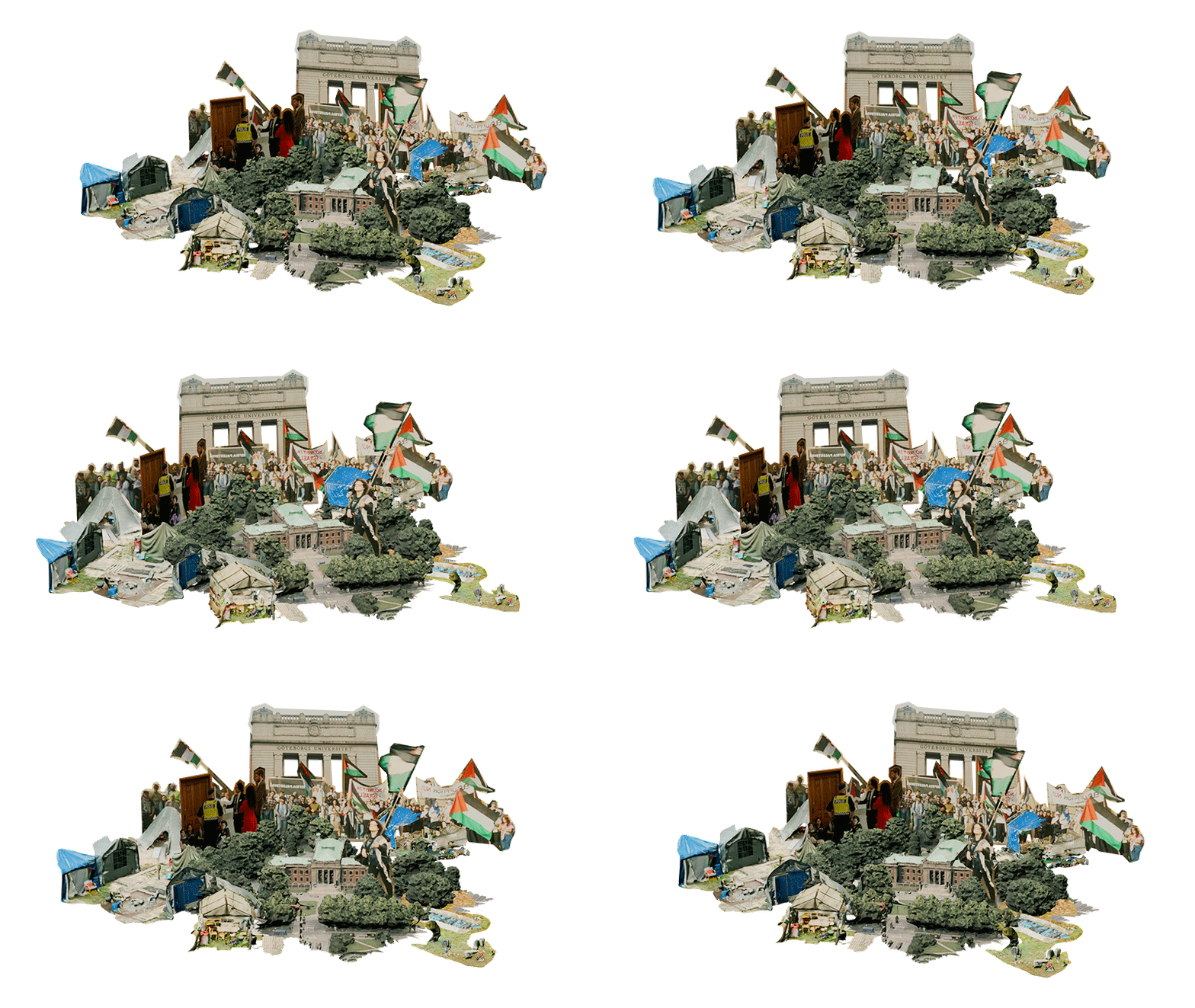
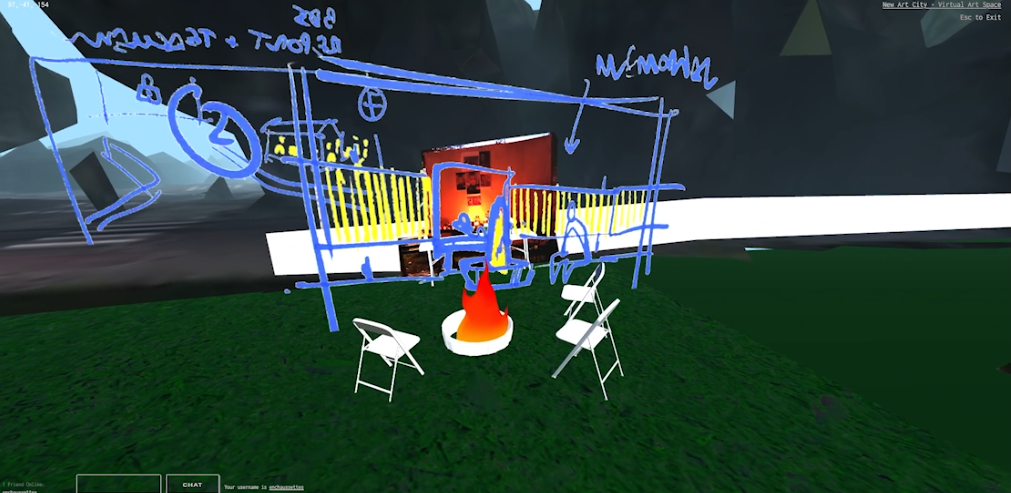
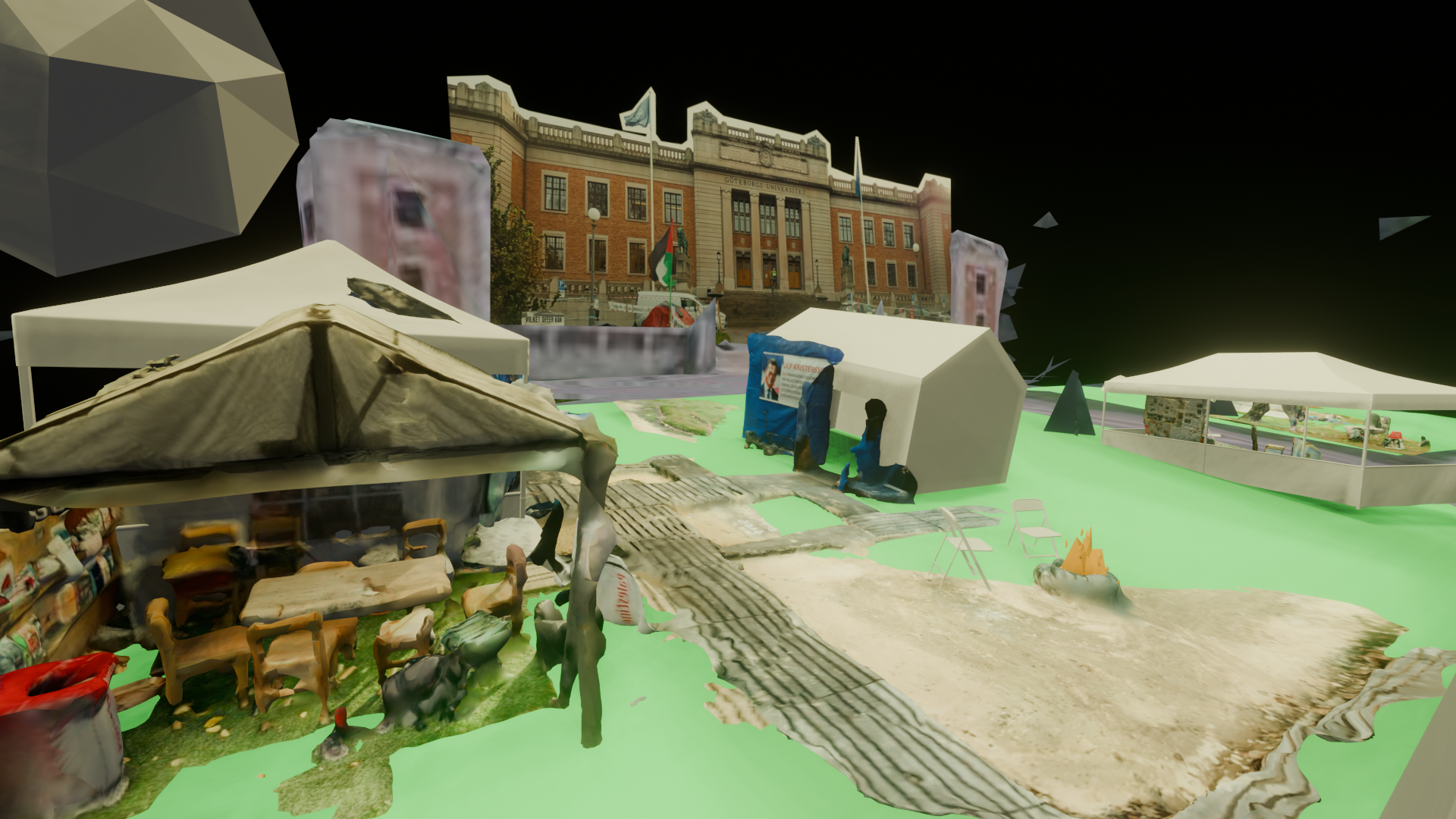
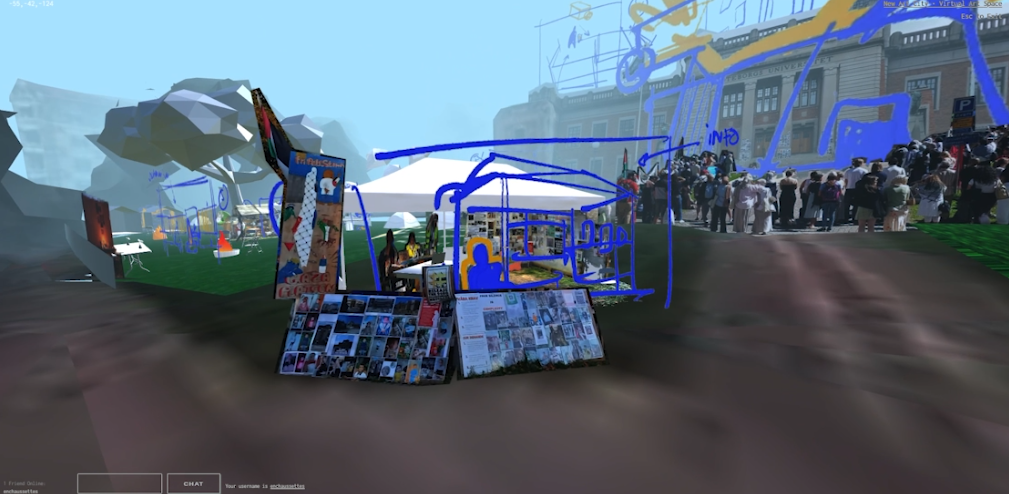
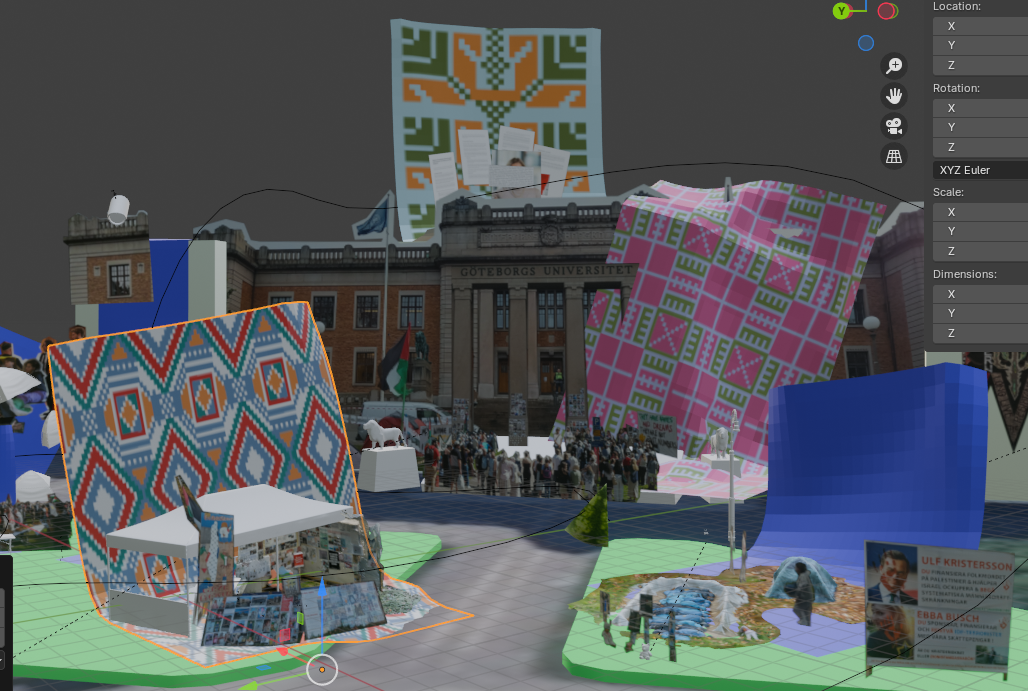
A key objective of my design process was to craft a unique visual tone to the virtual immersion into the encampment, one that could reflect the adhoc, plural, and improvisational nature of the encampment. To do so, I specifically explored the use of drawing and collage in 3D space, in order to both convey a sense of incompleteness and conscientiousness.
An early demonstration of what would become the Online Memorial shows the underlying structure of the space, paced through a series of vignettes. This structure carried through to the final design.
 |
 |
 |
 |
 |
Outcome: Counter-twinning
The outcome of this exploration is the development of "counter-twinning" a method inspired by counter-cartography and the discipline of Forensic Architecture pioneered by the eponymous research agency. a method that subverts existing digital mapping and 3D modeling platforms to document marginalized spatial narratives and acts of collective resistance. Rather than adding features to existing urban digital twins, counter-twinning advocates for civic actors to appropriate and reconfigure the technical tools that constitute Gothenburg's digital ecosystem to gain negotiation power and visibility.
This work culminated in the production of three counter-twinning prototypes and an open repository or wiki (Virtual Gazaplatsen Lab), offering a foundation for reimagining digital twins as public assets for collective liberation.
I. Counter-twinning as a method
| In the context of this project, counter-twinning was used to document the mobilization of Gothenburg’s inhabitants through spatial analysis, photomontages based on crowdsourced media, and the production of a real-time conversation simulator. I want to make clear that I am not seeking to reduce civic engagement to protest culture and its archiving, but rather to frame as civic engagement the very act of counter-twinning and occupying space in Gothenburg’s digital twinning landscape. It is crucial to find ways for individuals and groups involved in contesting the city’s activities to find use in urban digital twins and engaging in discourse on their very use. This is especially pressing since more common uses of urban digital twins in relation to protest culture at the moment tend to revolve more around its prediction, containment, and repression. |
|
II. Virtual Gazaplatsen Lab
| The Virtual Gazaplatsen Lab (VGL), is a nod to the Virtual Gothenburg Lab, a platform through which several urban digital twinning efforts have been organized. This VGL however, is the online repository where I have documented the three prototypes that emerged from the project and the database of events, scans, news coverage, capturing the Gazaplatsen encampment's digital footprint. The lab's wiki can be visited here 🍉. |

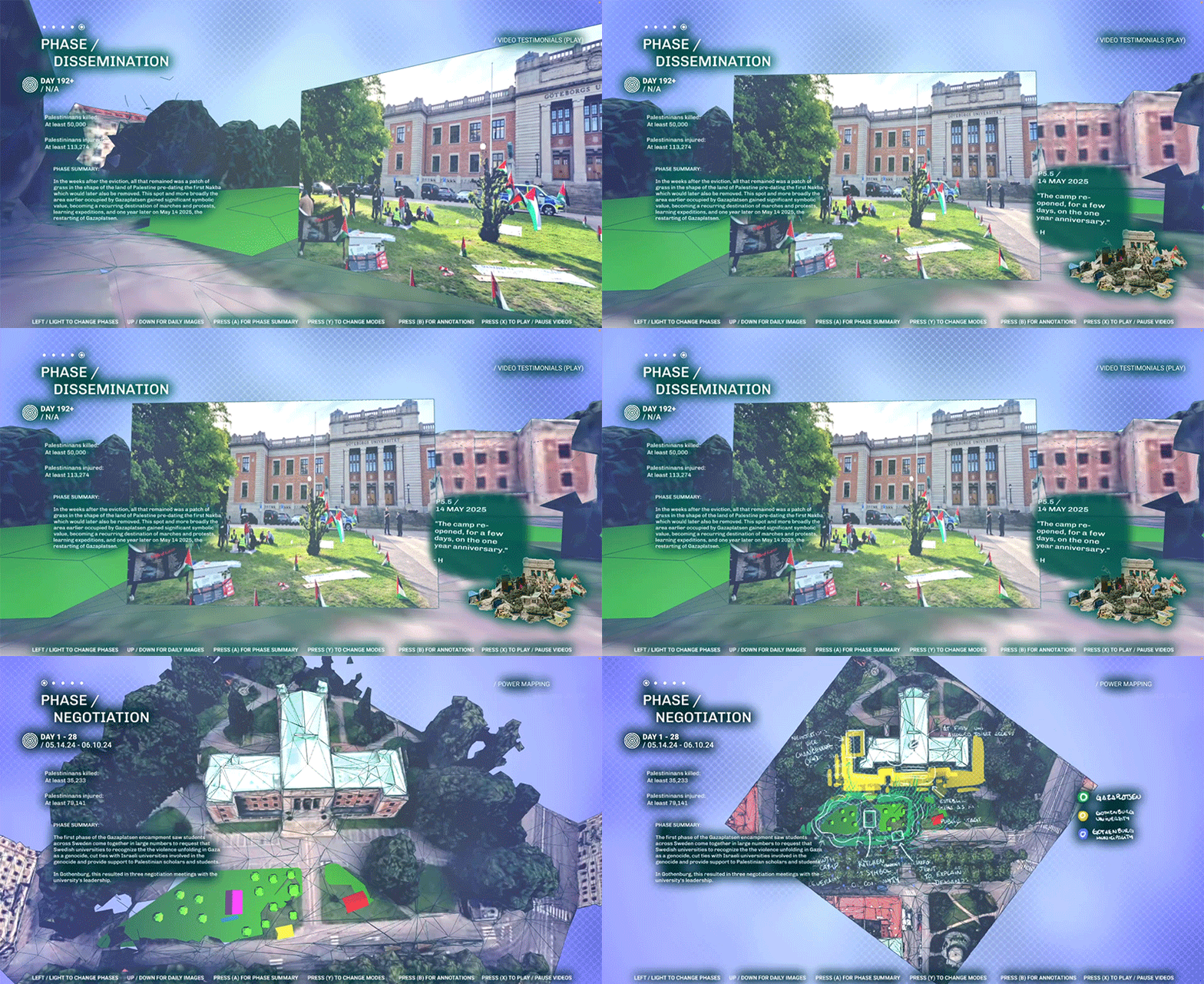
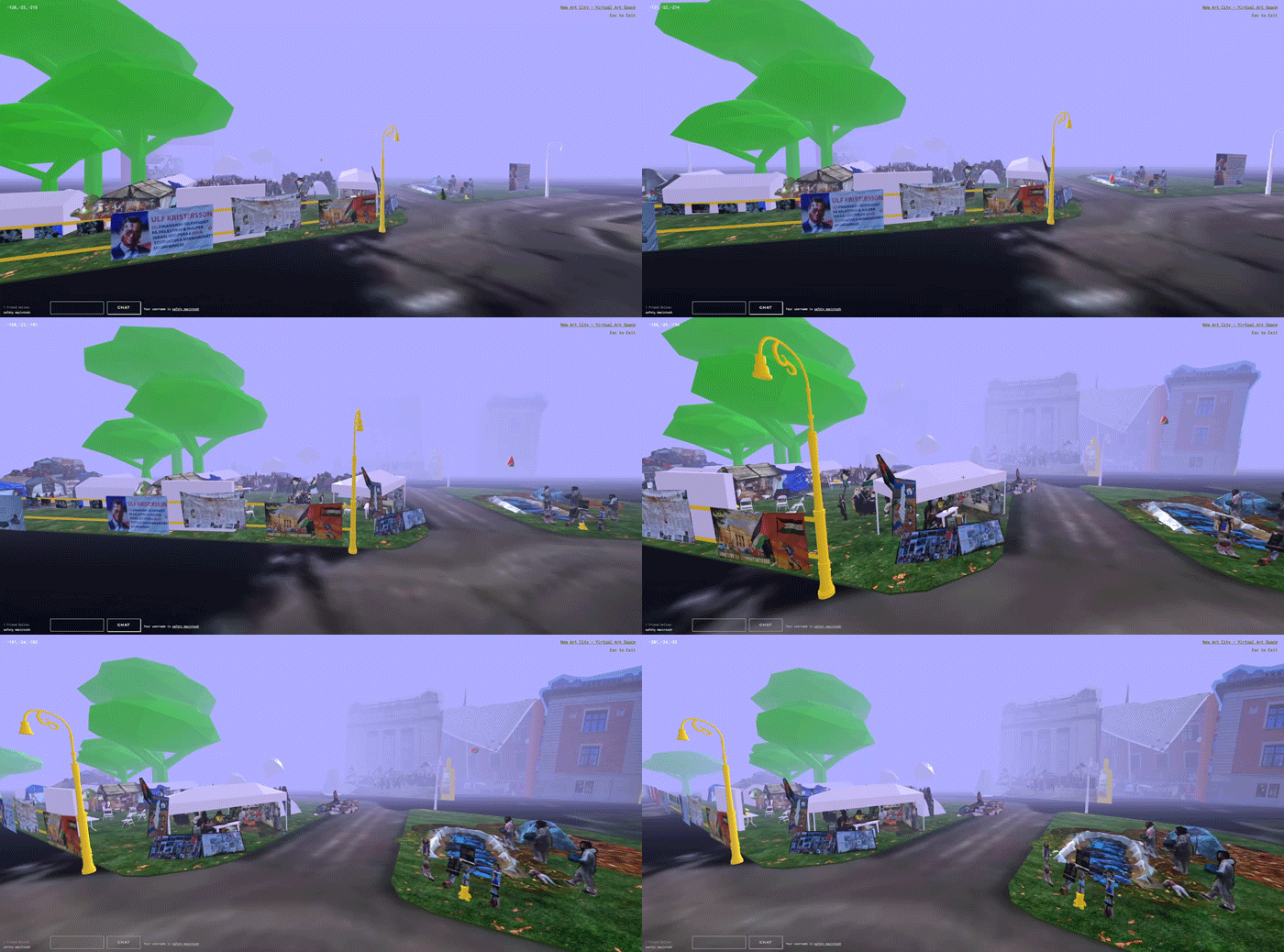
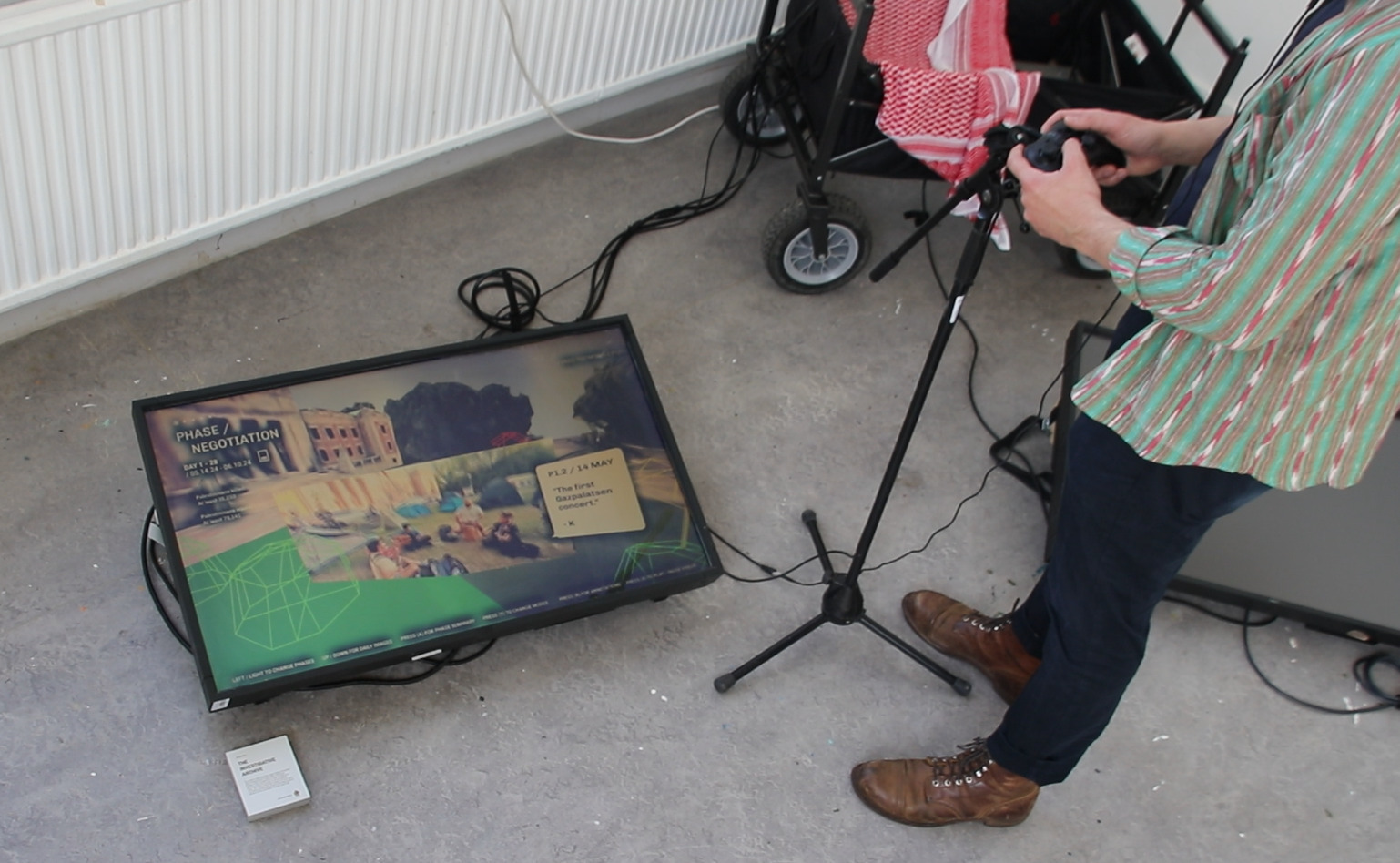
III. The Counter-Twin Prototypes
Investigative Sandbox An archive of the life of the camp mixing GIS data with found footage of the encampment used to reflect on the power dynamics at play in and around the camp. |
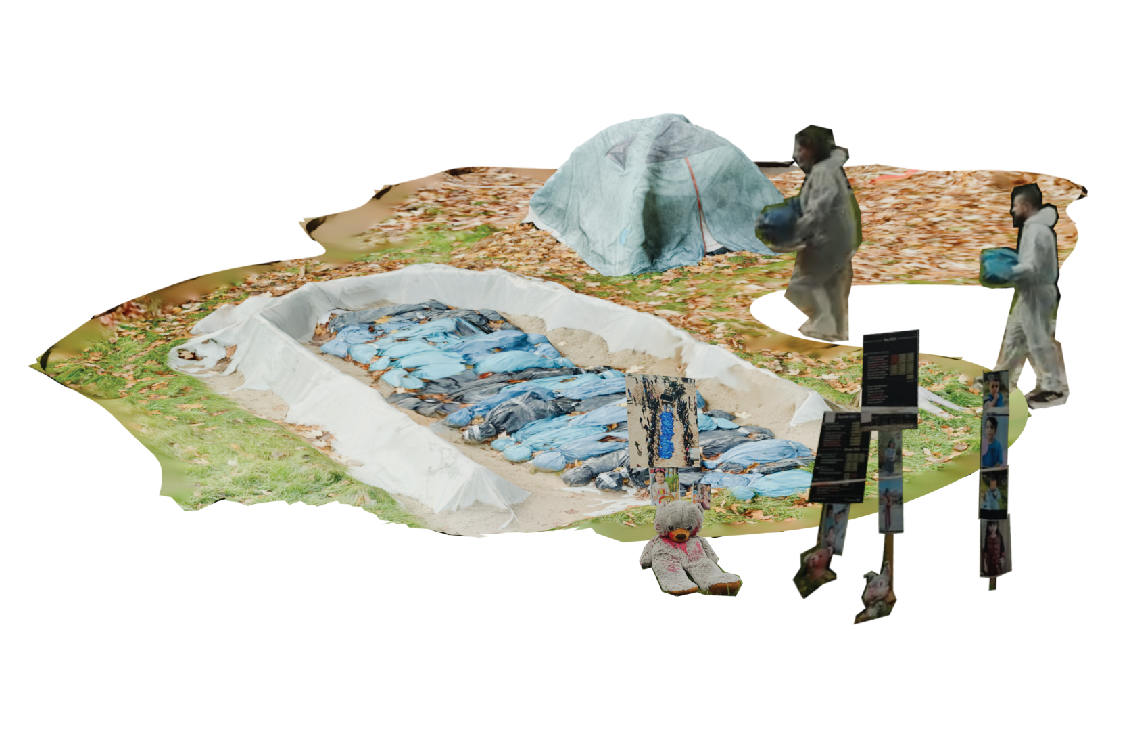
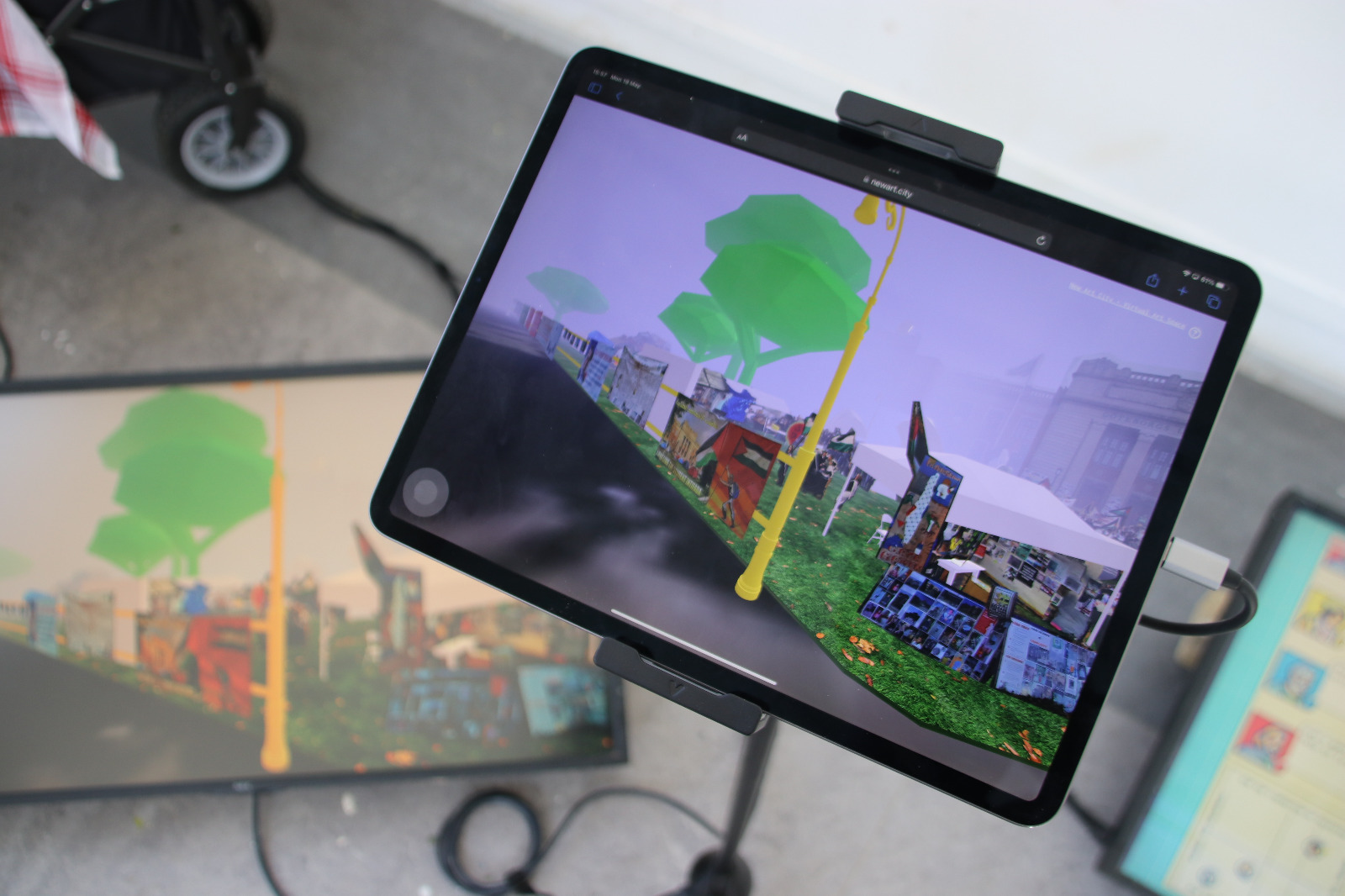
Online Memorial A subjective 3D depiction of the camp mixing photogrammetric captures, sound recordings and imagery found on social media to create a slightly surreal portrait of the spirit of the camp and how it confronted visitors with the cyclical nature of the violence inflicted upon the Palestinian people. |
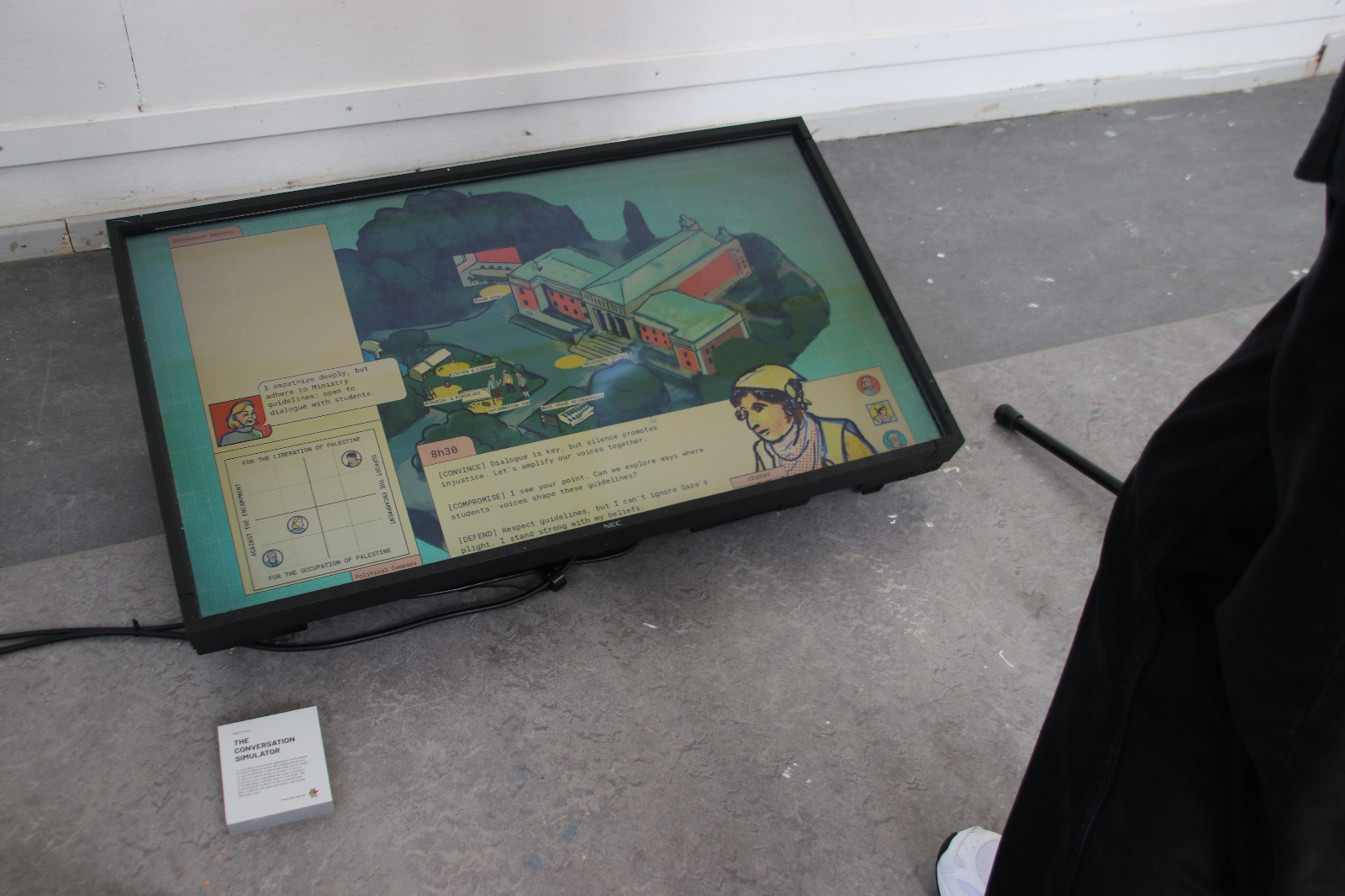
Ideological Simulator A real-time conversation simulation environment in which different actors like student protestors or representatives of the leadership can be made to interact surfacing a variety of perspectives regarding the camp’s presence in Gothenburg, and the cause it stood for. |
IV. Reflections on the Gothenburg twinning ecosystem
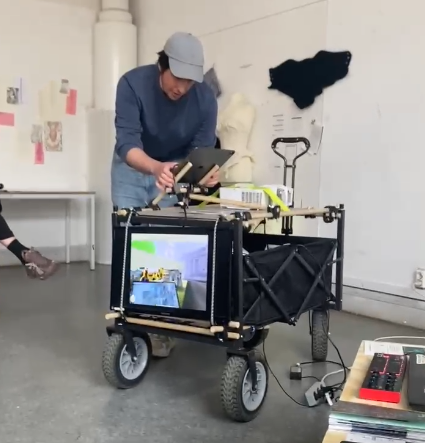
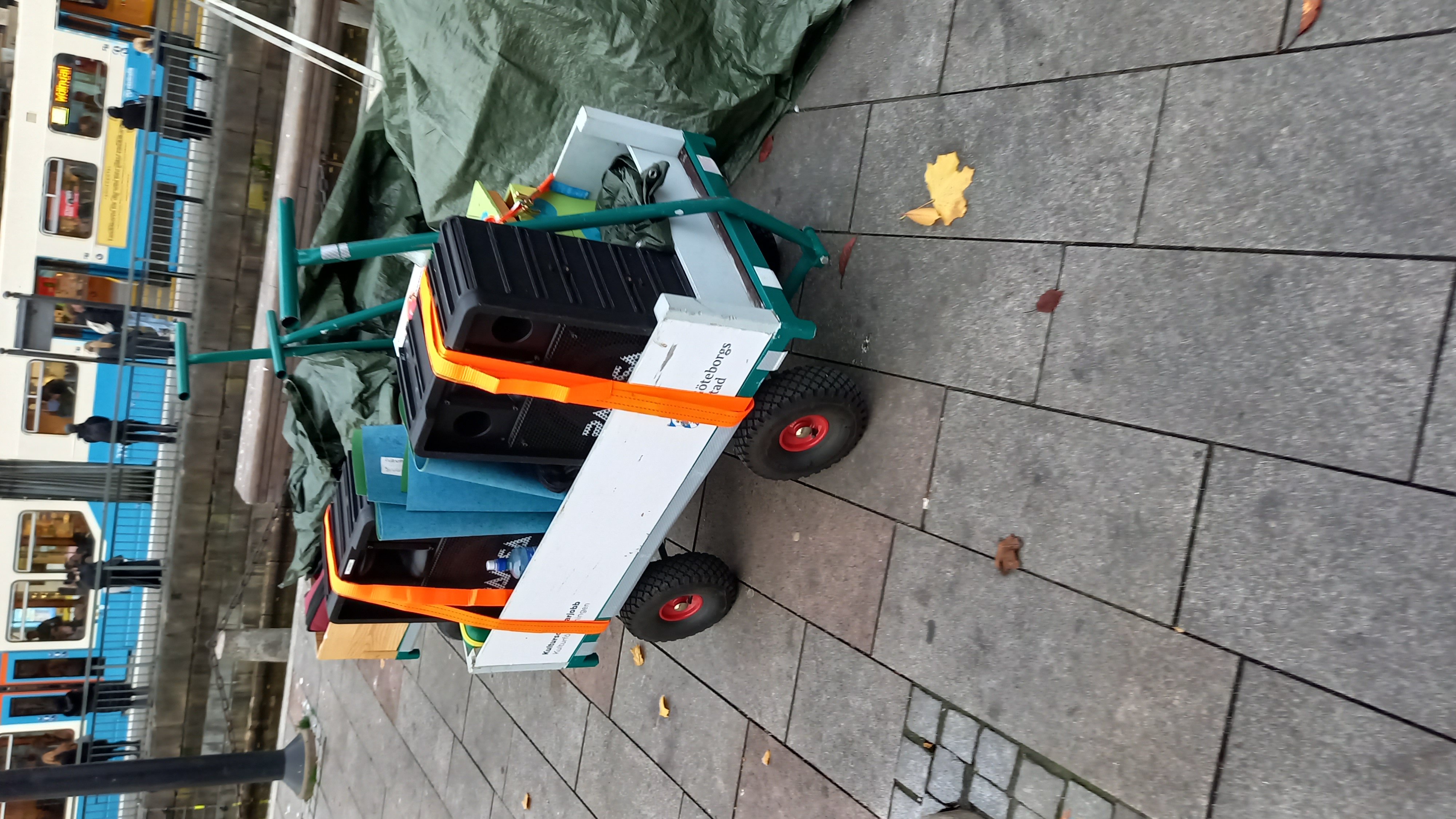
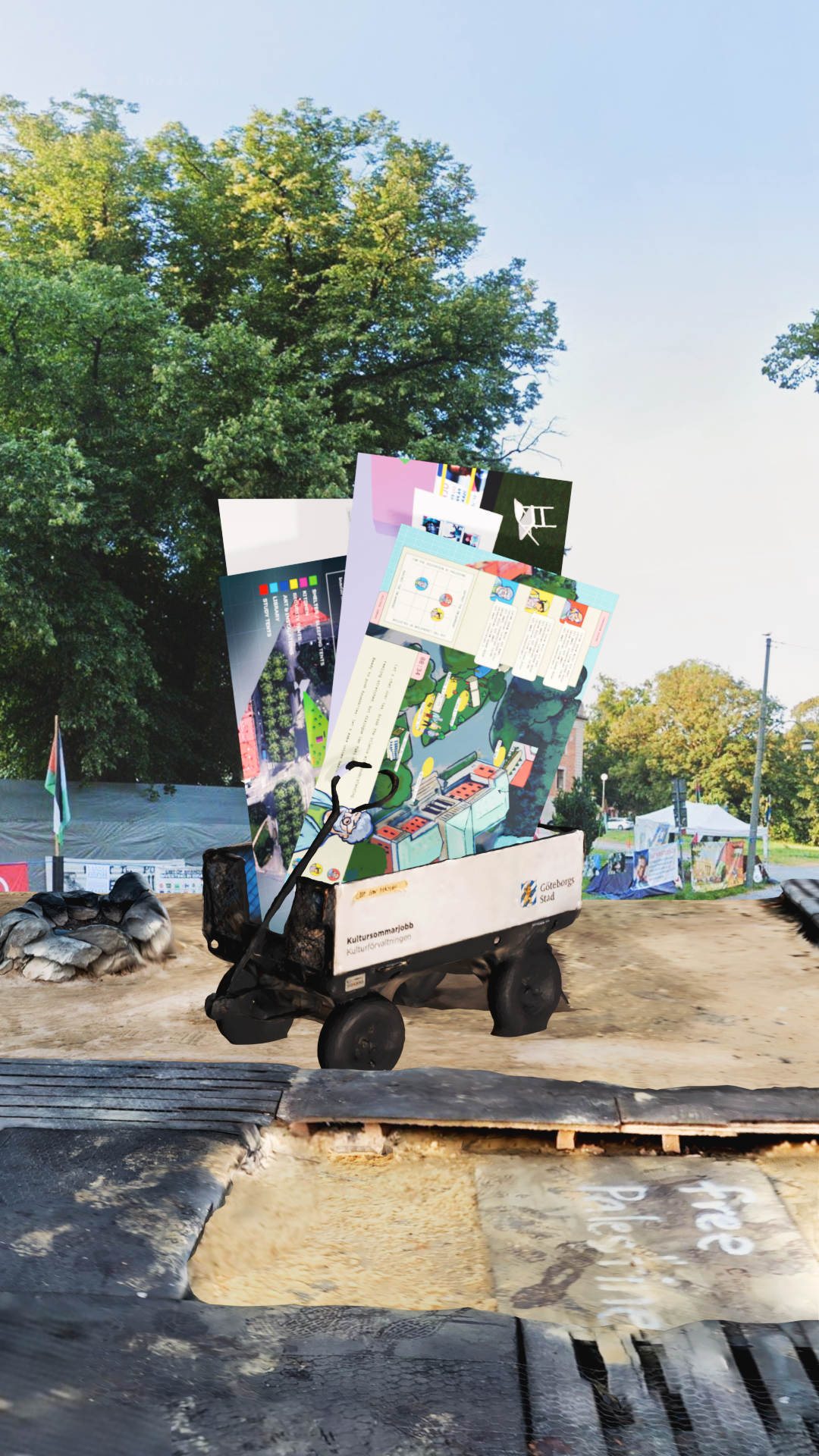
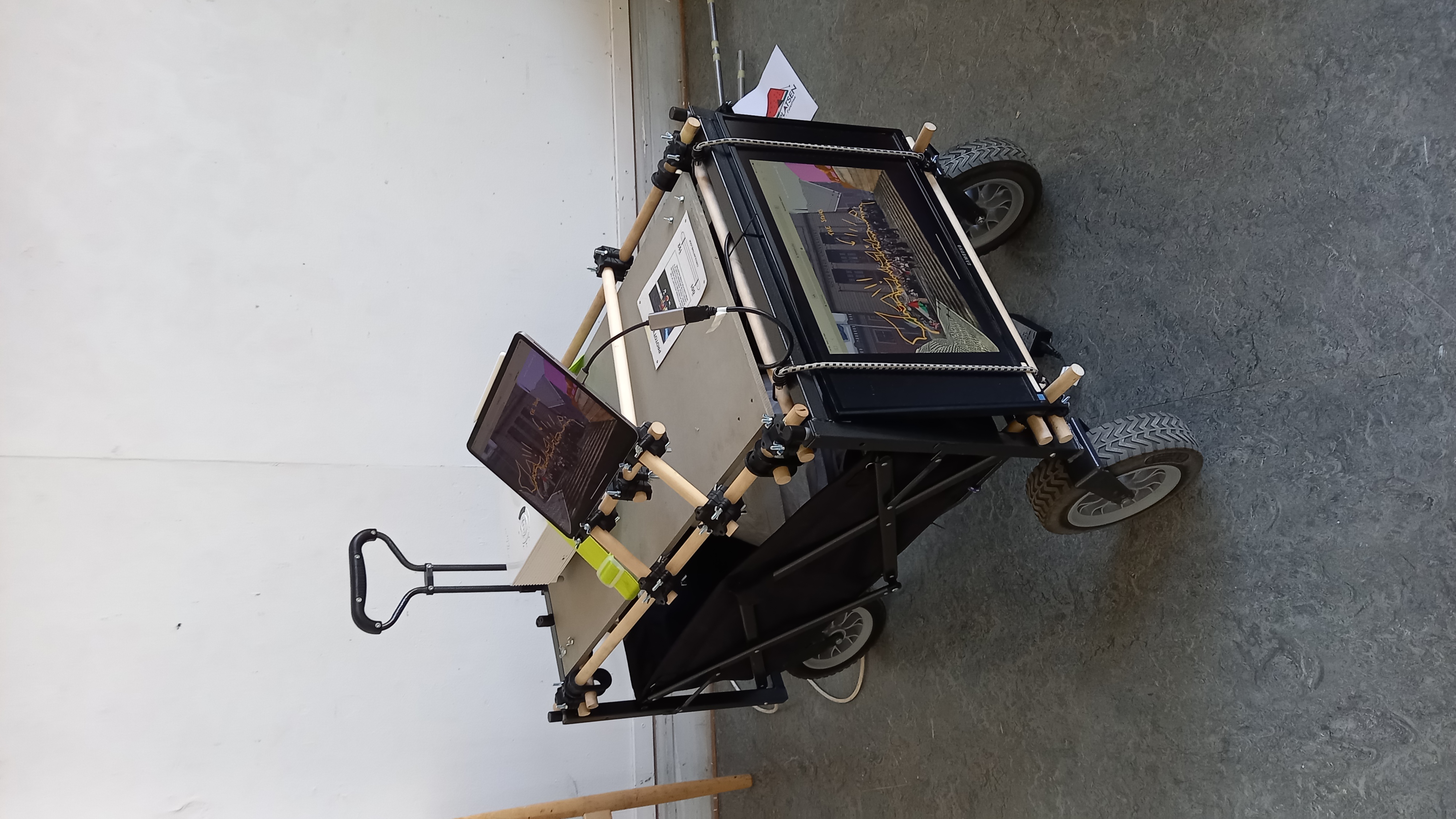
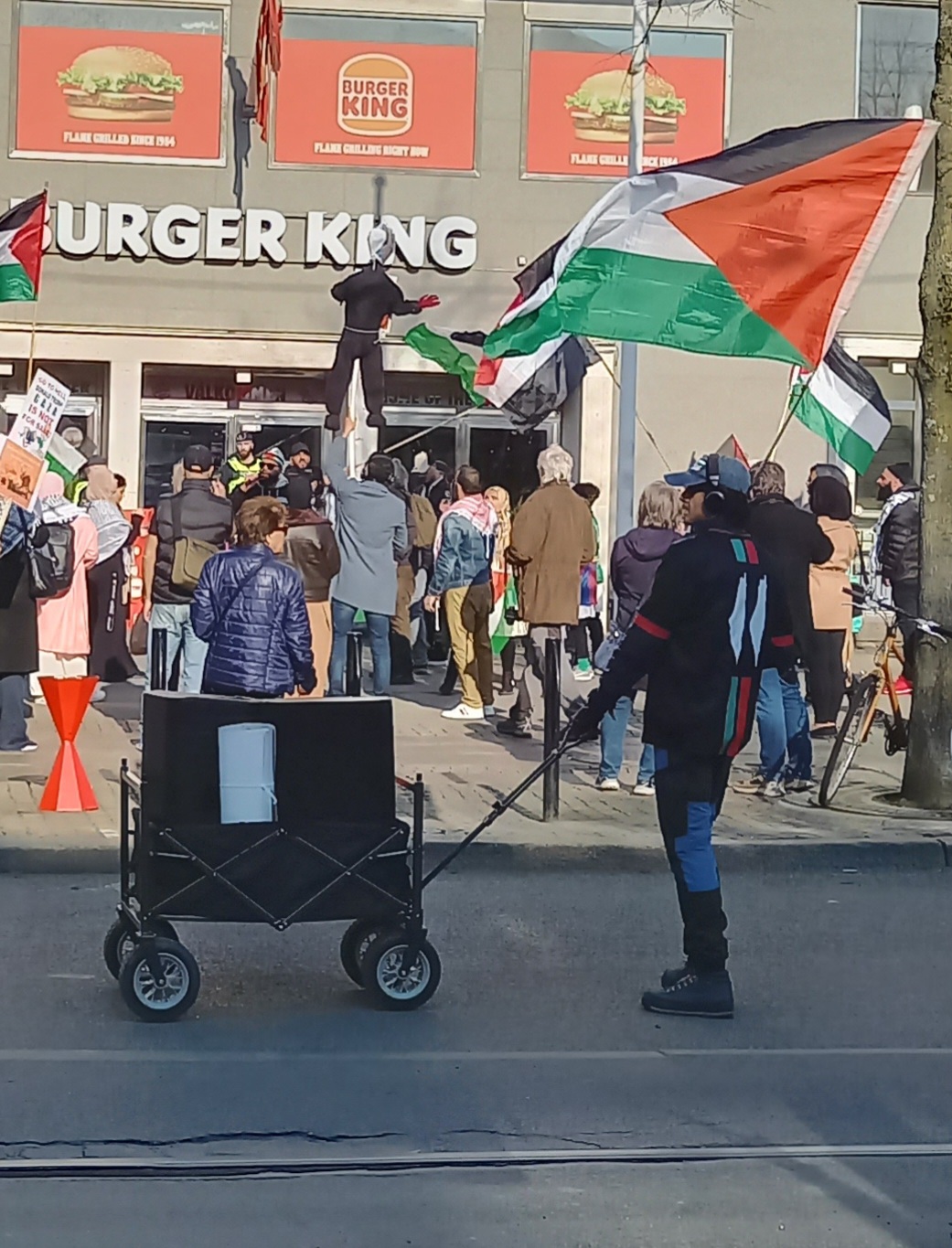
| Prior to the start of this project, I had come across carts provided to young musicians by the city of Gothenburg. Since then, I have been somewhat obsessed with imagining what a similar adhoc version of urban twinning equipment might look like. The cart is a strong symbol for the fluidity and adaptability of the city's creative infrastructure, willing to meet its inhabitants (both artists and audience) in public, outside of formal spaces like its operas and concert venues. While the experience of music is very different from that of twinning, the analogy still stands. The city would benefit from developing its participatory infrastructure through game jams, public mapping events, paid summer surveying jobs. Interestingly enough, while I was not allowed to borrow the city's carts for my project (the association with Gaza was deemed too sensitive), I was able to borrow the cart used at the weekly protests in support of Palestine to create a proof-of-concept of what a portable, human-scaled, participatory kit might look like. |
Role: Design researcher, Creative technologist
Client: HDK Valand, Gothenburg University
Collaborators: Mourdjen Bari
Location : Gothenburg, Sweden
🡨 Back